
However You Say It, Thank You Means Everything
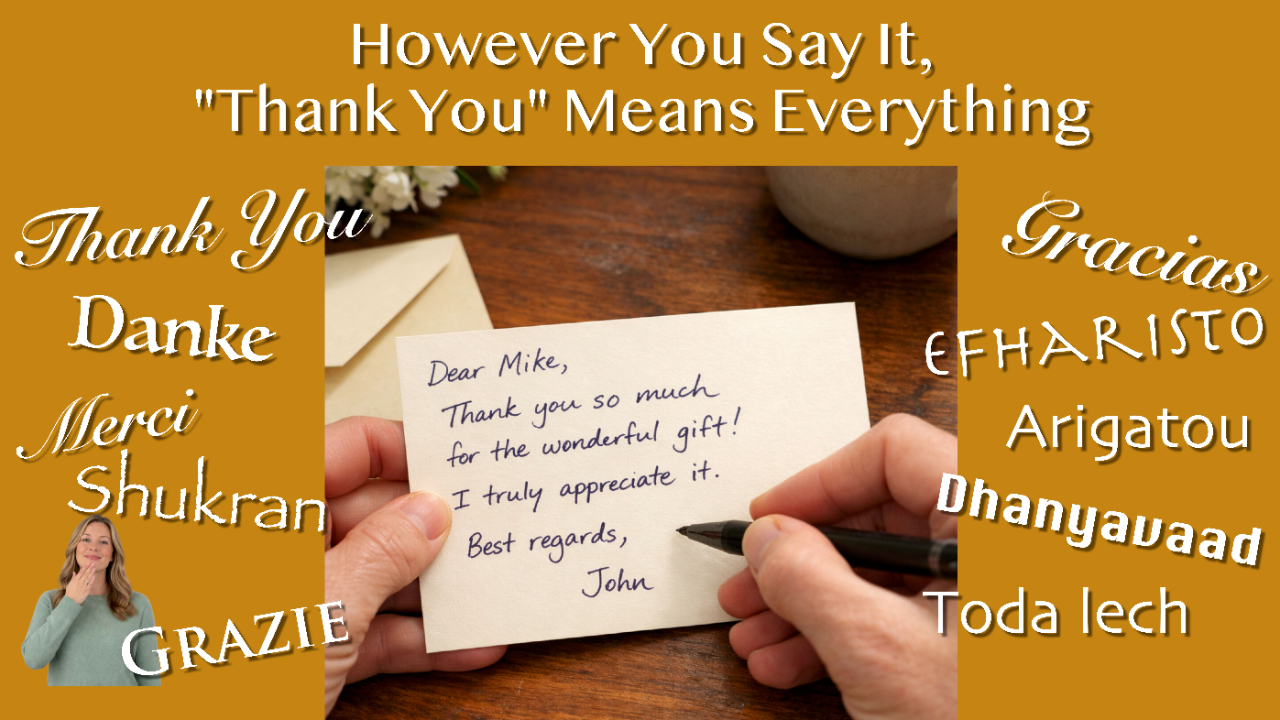
“Thank you.”
“Merci.”
“Grazie.”
“Danke.”
“Shukran.”
Different words. Different cultures. Same meaning.
Across every language, “thank you” carries something universal—gratitude, appreciation, and, perhaps most importantly, acknowledgement. It’s a simple expression, but it does something powerful: it lets another person know, “I see what you did, and it mattered.”
Which is why its absence stands out so much.
Lately, I’ve noticed a growing pattern—not just socially, but professionally as well. Gifts are given, gestures are made, invitations are extended… and nothing comes back. No note. No text. No email. Not even a quick mention the next time you speak.
And while it may seem like a small thing, it’s not. Because this isn’t really about the words “thank you.” It’s about what those words represent.
When someone takes the time to send a graduation gift, celebrate a wedding, acknowledge a birthday, or host you for dinner, there’s intention behind it. There’s thought. There’s effort. And when that goes unacknowledged, the silence says something—whether we mean it to or not.
It says, “I didn’t notice.” Or worse, “It didn’t matter.”
In personal relationships, that silence can quietly erode connection. It leaves the giver wondering. Was it received? Was it appreciated? Did it even arrive? What should have been a moment of shared goodwill becomes a lingering question mark.
And then there’s the awkward part.
Do you follow up? Do you ask if they got it? Do you bring it up casually? Most people don’t want to do that—it feels uncomfortable, even a little self-serving. But in reality, they’re not asking for praise. They’re asking for confirmation. They’re trying to close the loop.
That’s what acknowledgement does. It completes the exchange.
This becomes even more important in the corporate world.
I’ve seen it firsthand—thoughtful client gifts sent for holidays or special occasions, carefully chosen and intentionally delivered… and no response. Not even a passing comment during a subsequent business call.
That’s more than a missed “thank you.” It’s a missed opportunity.
In business, details matter. Responsiveness matters. Awareness matters. When a gesture goes unacknowledged, it raises a subtle but important question: If this didn’t register, what else doesn’t?
Because strong professionals—and strong leaders—are defined by how they handle the small moments.
They notice. They respond. They follow through.
And they understand that acknowledgement isn’t optional—it’s foundational.
It’s also practical.
In many cases, especially in business settings, the giver genuinely needs to know whether the gift was received. Packages get delayed. Deliveries get rerouted. Items sit in mailrooms or at front desks. Without acknowledgement, there’s uncertainty. And now, instead of strengthening a relationship, the situation introduces doubt—and sometimes even frustration.
All of this, tied back to two simple words.
“Thank you.”
However you say it, it means everything. Not because of tradition. Not because of etiquette. But because of what it communicates about you.
It says you’re paying attention. It says you value the effort of others. It says you understand that relationships are built in moments like these.
And the good news? This isn’t complicated to fix.
Yes, a handwritten note is still the gold standard. There’s something meaningful about taking the time to put pen to paper. But if that’s not realistic, a quick text, a short email, or a brief call works just as well.
“Just received your gift—thank you. That meant a lot.” That’s it. A few seconds. A complete shift in impact.
In a world that is moving faster, becoming more digital, and, in many ways, more impersonal, these small acts of acknowledgement carry even more weight than they used to. Because while technology continues to change how we communicate, it hasn’t changed what people need to feel valued.
They need to be seen.
They need to be acknowledged.
They need to know that what they did mattered.
And sometimes, all it takes is two words—spoken in any language—to make that clear.
Thank you for investing your time to read this message.
Fred Reggie is a Business Strategy Coach and International Speaker specializing in Service Culture Development, Leadership, and Communication. He facilitates successful Mission Development workshops and retreats to elevate client brands. He is the Best-Selling author of “Tell Me... How to Initiate and Nurture MEANINGFUL CONVERSATIONS with Anyone, Anywhere, Anytime”. You can contact Fred through Email , connect on LInkedIn, or schedule a call to discuss how your company's Service Culture measures up.
